
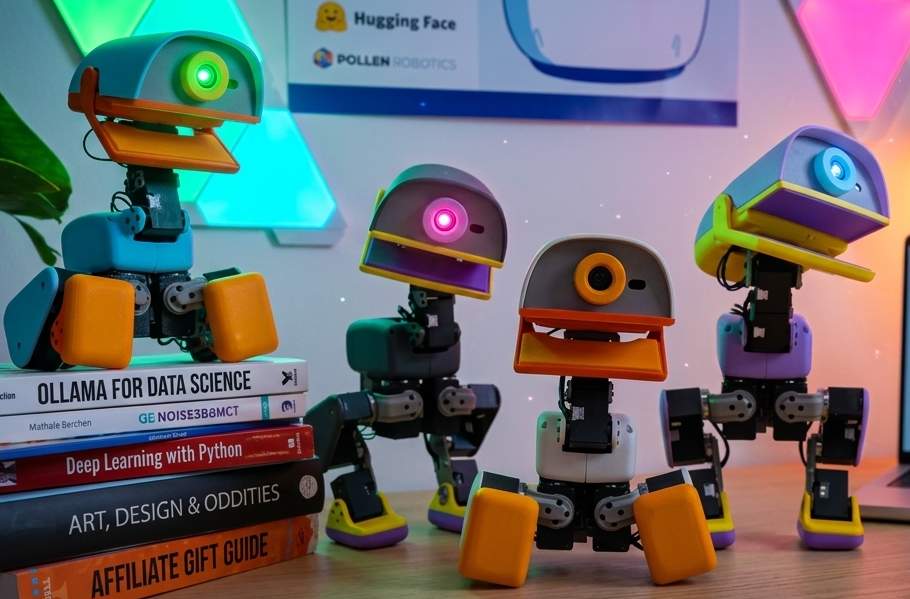
Meet Microduck, a tiny AI-powered robot duck that looks like something straight out of a cartoon but is actually designed to be a programmable robotics platform. Created by Pollen Robotics and Hugging Face, this 25 cm tall little biped can walk, sit, pick things up with its beak, kick a ball, recover after falling, and even roller-skate. It’s also open source, so developers can teach it new tricks instead of being stuck with whatever abilities it has out of the box.
A Duck That Can Learn New Tricks
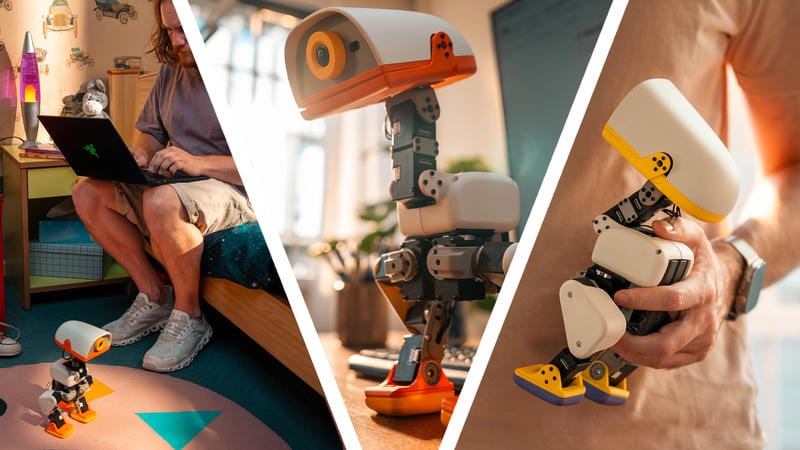
Microduck comes with seven trained behaviors, including walking, sitting and standing, kicking, grabbing objects, roller-skating, and getting back on its feet after a fall. The interesting part is that these aren’t simply pre-programmed animations. Its behaviors are trained using reinforcement learning in a physics simulator, then transferred to the real robot. Developers can retrain the policies and create completely new movements.
Surprisingly Capable For Its Size
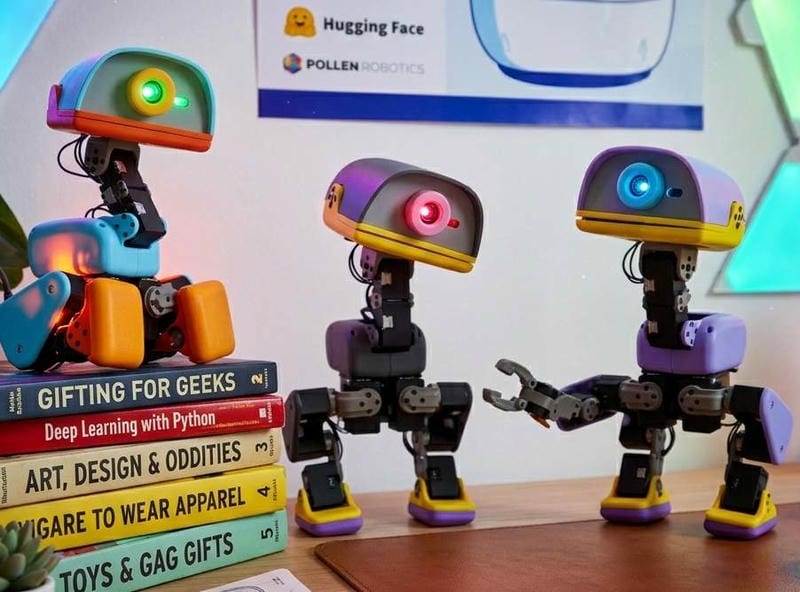
The tiny duck measures about 25 cm tall, weighs under 800 grams, and has 15 motors controlling its legs, head, neck, and beak. It also has a camera, LiDAR, two IMUs, microphones, a speaker, Wi-Fi and Bluetooth. A removable battery provides roughly an hour of operation, while a Rockchip RK3566 processor handles the onboard computing.
Built For Tinkering
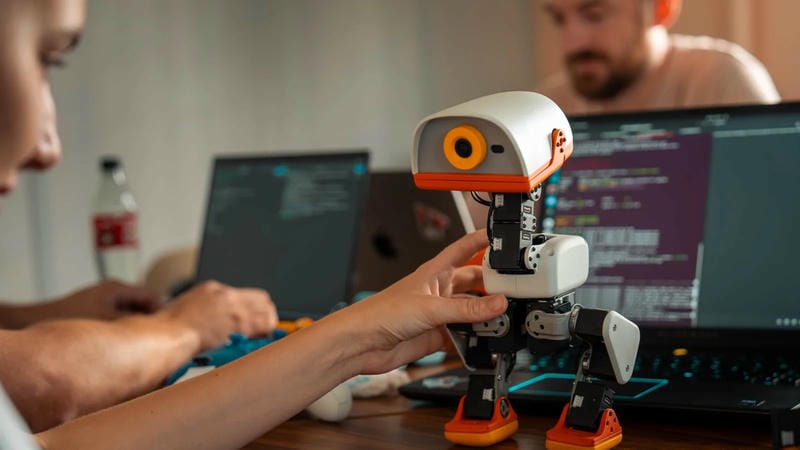
What makes Microduck particularly interesting is how much of its software stack is available to developers. The SDK, simulation environment, and reinforcement learning training tools are open source, allowing people to experiment with the robot’s behavior and train their own skills. You can essentially teach the duck something new in simulation and then deploy that behavior onto the physical robot.
$399 For Your Own Robot Duck
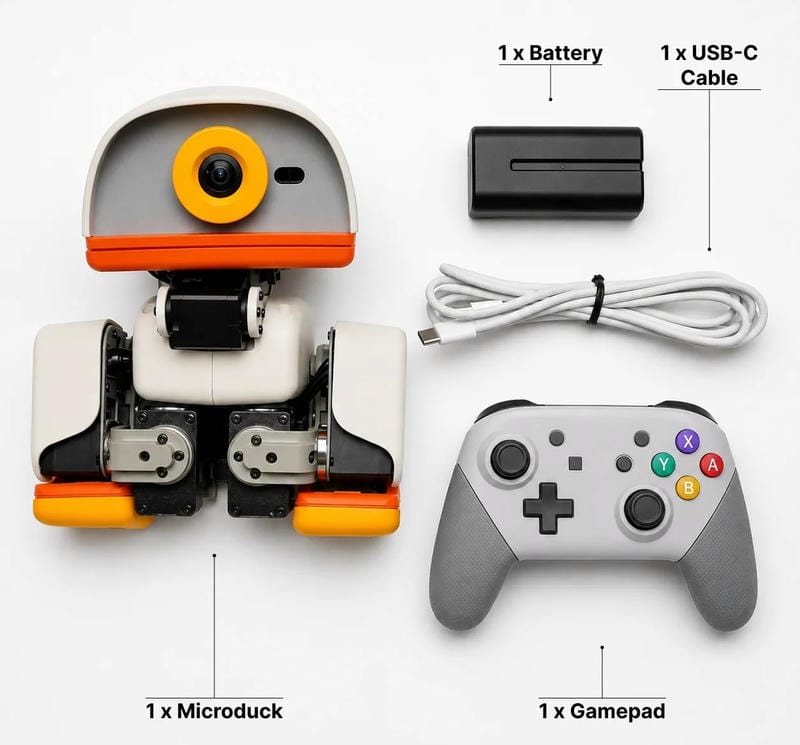
Microduck is available for preorder for $399 before taxes and shipping, with deliveries targeted for before Christmas 2026. It comes with the robot, battery, USB-C cable, and a game controller. There are also optional accessories, including a charger pack and a developer pack with spare motors, batteries, NFC tags, and other hardware. For anyone who’s ever wanted a tiny robot pet that can actually learn new tricks, Microduck might be one of the more entertaining ways to get into physical AI.
Technical Specs
Under the hood, Microduck runs on a Rockchip RK3566 processor with 4GB of RAM and 32GB of storage. It has 15 Dynamixel XL330-M288-T motors, a 120-degree field-of-view camera, 360-degree LiDAR, two IMUs, four microphones, and a speaker. The robot connects over Wi-Fi and Bluetooth, uses a 2,000 mAh battery rated for around one hour of operation, and charges through USB-C. It stands approximately 25 cm tall and weighs about 800 grams.


